
Ants, Rats and Mice in Your Wiring — Why Mid North Coast Properties Get Electrical Faults
If you’re on acreage or a rural block around Bellingen, Dorrigo, Coffs or Nambucca and your power keeps tripping for no obvious reason, there’s a culprit most people never think of: pests. Ants nesting in the switchboard and rodents chewing through cable insulation are two of the most common causes of electrical faults we see on Mid North Coast properties, and both can go from a nuisance trip to a genuine fire risk if they’re left alone.
Short answer: ants and rats cause real, recurring electrical faults, nuisance tripping, shorts, corroded terminals and even fire risk. It’s not a DIY fix; opening a live board is dangerous and the damage is usually hidden, so a licensed electrician needs to isolate the supply, find it, repair it and test. Here’s what’s happening inside your wiring and how we stop it coming back.
Why Ants Get Into Your Switchboard
Short answer: your switchboard and meter box are warm, dry and sheltered, ideal nesting spots, and once ants are crossing live terminals they cause tracking, corrosion and shorts.
Certain ants are drawn to electrical gear. Your switchboard, meter box, air-conditioning unit and pool equipment all give them somewhere snug to nest. The problem starts once they’re inside. As ants move across live terminals, their bodies and the dirt they bring in bridge gaps that are meant to stay separated. That causes small arcs and tracking across contacts, which shows up as:
- Nuisance tripping: a safety switch (RCD) that keeps tripping and resetting with no faulty appliance to blame
- Corrosion: terminals and connections degrading over time
- Dead shorts: a mass die-off inside the board can pile debris across the terminals and short things out completely
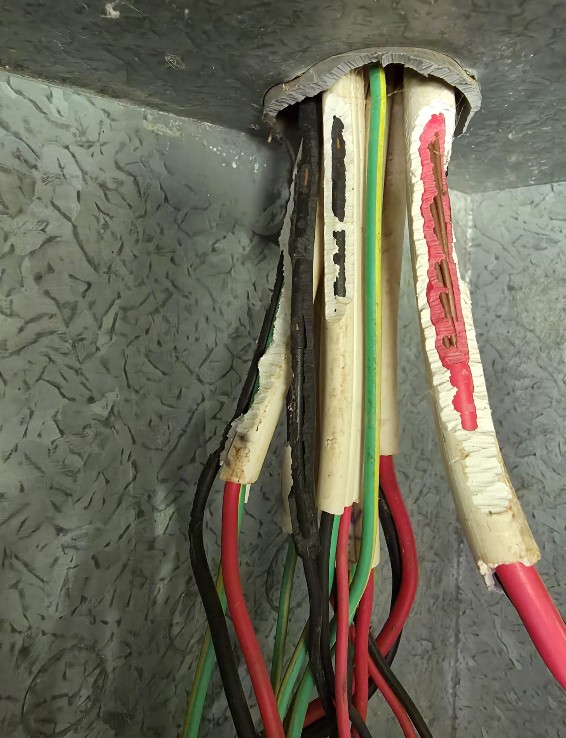
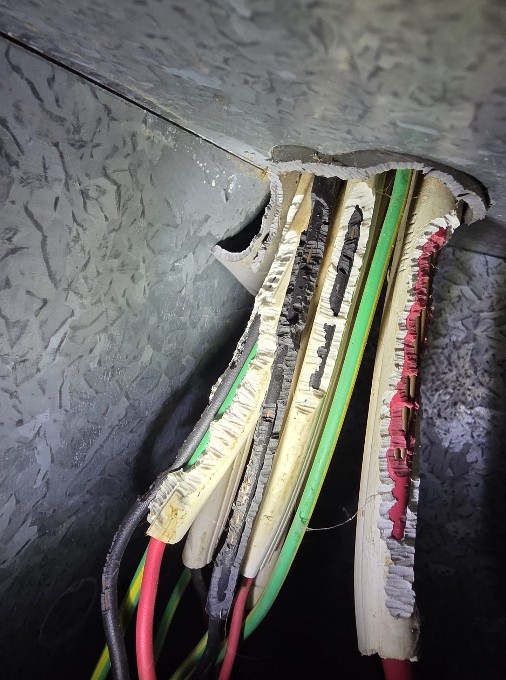
Why Rats And Mice Chew Wiring
Short answer: rodents gnaw constantly to wear their teeth down, and cable insulation is an easy target, once it’s stripped you’ve got exposed copper in a roof or wall cavity, which means shorts and fire risk.
On acreage it’s worse, because sheds, roof spaces and the bush edge give rodents plenty of cover right next to your cabling. We’ve pulled apart conduit that’s been chewed straight through and found nests built around the cable runs. This is the same reason we treat sealing and cable protection as part of doing the job properly when we handle shed and acreage wiring and workshop power fit-outs.
Warning Signs Worth Acting On
Short answer: if any of these sound familiar, get the switchboard looked at before it becomes a callout in the dark.
- A safety switch that trips and won’t stay reset, with no faulty appliance behind it
- Flickering lights or circuits that drop out intermittently
- A burning or acrid smell near the switchboard or a power point
- A circuit that’s gone completely dead
- Live ants around the meter box or switchboard, or droppings near cabling in the shed or roof
Why This Isn’t A DIY Fix
Short answer: opening a live switchboard is dangerous, and pest damage is usually hidden where you can’t see it, it needs a licensed electrician to safely isolate, inspect, repair and test.
Pest damage often sits inside the board, the roof void or a conduit run where you can’t see it. A licensed electrician will safely isolate the supply, inspect the full extent of the damage, clean and repair the affected wiring, and then test that every circuit and safety switch works as it should. Patching the bit you can see usually misses the bit you can’t.

How We Stop It Coming Back
Short answer: seal the entry points, protect exposed cable runs, clear existing nests and isolate faults at the board, then bring in a pest controller for the colony itself.
- Seal the entry points: proper glands and seals on cable entries into boards and conduit so there’s no easy way in
- Pest-resistant conduit and fittings on exposed runs, especially in sheds and roof spaces
- Switchboard clean-out and inspection: clearing existing nests and checking terminals for tracking damage, often paired with a switchboard upgrade if the board is old or full
- RCBOs and surge protection so a fault on one circuit isolates itself instead of taking out the whole board
- Keep vegetation cut back from the meter box and external gear
Pests are a two-trade job, we handle the electrical side, and we’ll always tell you to get a pest controller in alongside us to deal with the colony itself. Sealing the wiring without treating the nest just buys you time.
If you’re on a rural block around Bellingen, Dorrigo, Coffs or Nambucca and you’ve got unexplained tripping, get the switchboard checked before it becomes an after-dark emergency. Book Damian for a switchboard and wiring inspection or call 0402 079 803.
Frequently Asked Questions
Can Ants Really Damage A Switchboard?
Yes. Ants nest in the warm, dry space inside boards and meter boxes, and as they cross live terminals they cause tracking, corrosion and shorts. A mass die-off can bridge the terminals and trip the board completely. It’s a common and often-missed cause of unexplained safety-switch tripping on rural properties.
Why Does My Safety Switch Keep Tripping For No Reason?
A safety switch that won’t stay reset is detecting a fault somewhere on the circuit. With no faulty appliance to blame, the common hidden causes are moisture in the board, an ant infestation, or rodent-damaged cabling in the roof or walls. It needs a licensed electrician to trace, it isn’t something to keep resetting and ignoring.
Do Rats And Mice Really Chew Through Electrical Wires?
They do. Rodents gnaw constantly to wear their ever-growing teeth down, and cable insulation is an easy target. Once they strip the insulation off a conductor you’ve got bare copper sitting in a roof or wall cavity, which is both a short-circuit risk and a real fire risk where it meets timber, dust or insulation batts.
Can I Get Rid Of The Pests Myself?
You can treat the colony with a pest controller, and you should, but the electrical damage is a separate job. We seal cable entries, protect exposed runs and repair anything that’s already been chewed or shorted, then test the board. Sealing the wiring without treating the nest only buys time, so the two trades work best together.
Does Home Insurance Cover Rodent-Damaged Wiring?
It varies between insurers and policies, some cover sudden damage but exclude gradual pest or vermin damage, so check your own policy wording. Either way, getting the fault found, repaired and tested by a licensed electrician gives you the documentation you’d need if you do make a claim.

Our Services
Get A Free Quote
Contact us today for a free, no-obligation quote on your electrical needs.
