
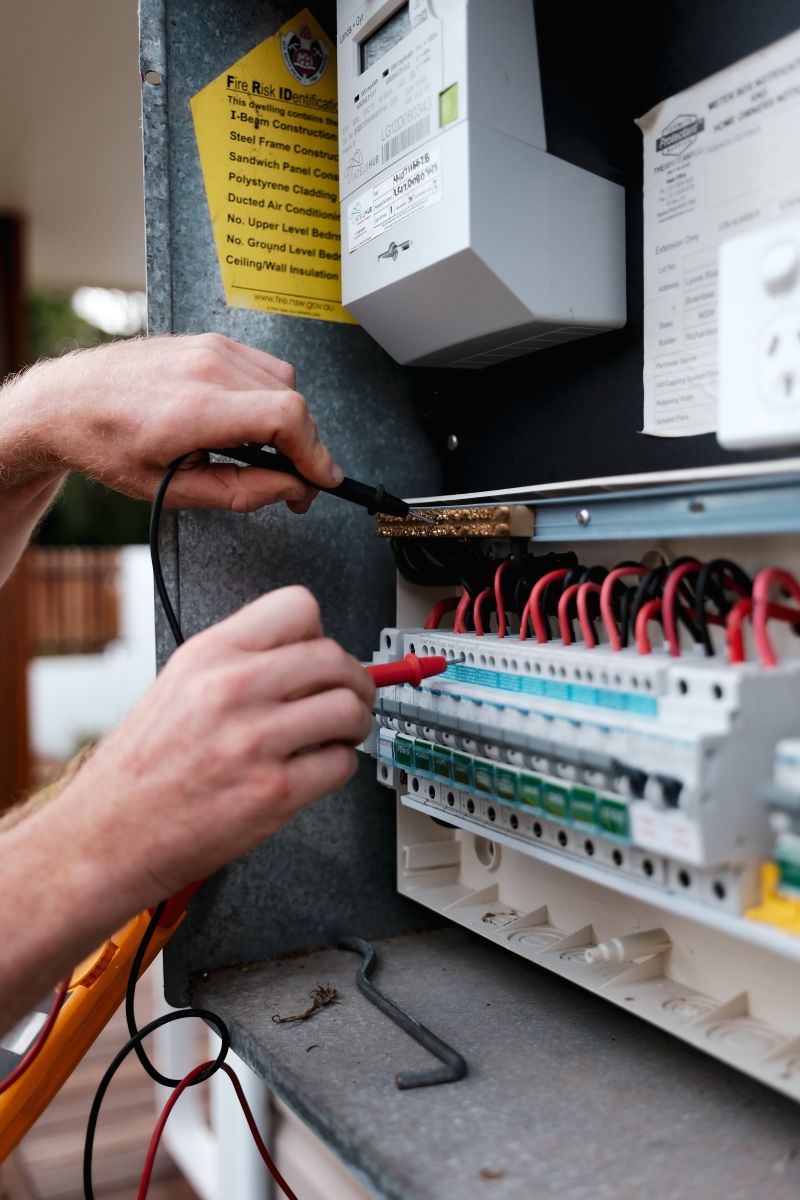
It’s a strange one the first time it happens: the kitchen and half the lights are dead, but the TV’s still going and the other end of the house has power like nothing’s wrong. We get called out to this a lot around Bellingen, Coffs, Sawtell and Nambucca, and the good news is it’s almost always a single circuit or one part of the board, not the whole supply failing.
Short answer: if only part of your house has lost power, the most likely causes are a tripped safety switch or circuit breaker, a faulty appliance dragging a circuit down, or a loose or failing connection in the switchboard. A couple of those you can safely check yourself; the rest need a licensed electrician, because anything inside the board or a hidden bad connection can start a fire if it’s left.
Why Only Half The House Goes Dark
Short answer: your home isn’t wired as one big circuit, it’s split into several, each protected by its own switch in the board, so a fault on one leaves the others running.
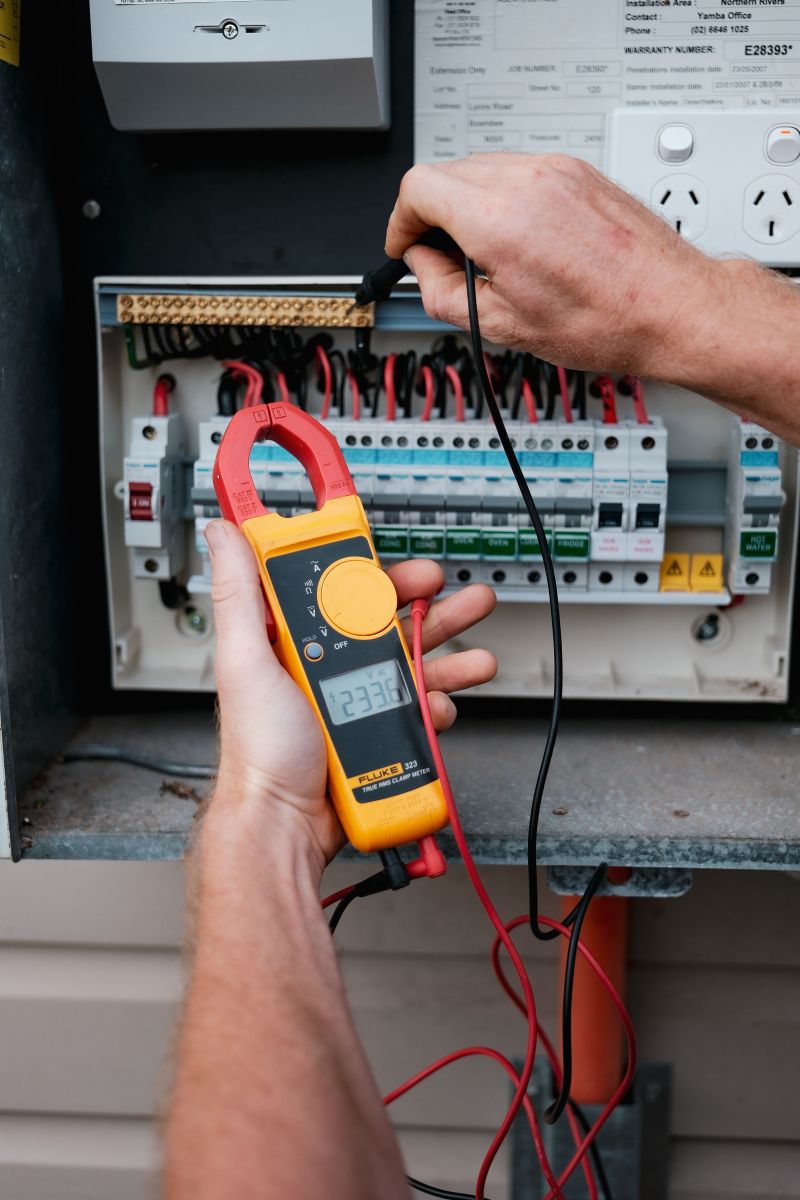
Your switchboard divides the house into separate circuits: power points in one zone, lights in another, the oven, the hot water, the air-con and so on. Each one runs through its own circuit breaker or safety switch. When something goes wrong on a single circuit, only that switch trips, which is exactly why you end up with half a house working and half of it dark. It’s the system doing its job. The question is what tripped it, and whether it’ll happen again.
What You Can Safely Check Yourself
Short answer: you can look at the switchboard and try resetting a tripped switch once, and you can unplug appliances, but never open the board up or poke around inside it.
- Open the switchboard and look for a switch that’s flicked to OFF (or sits halfway). That’s the tripped circuit. Switch it firmly fully off, then back on.
- If it trips straight back, leave it off. Something on that circuit is faulty, don’t keep forcing it.
- Unplug appliances on the dead circuit before resetting. A failing kettle, fridge, pool pump or power tool is one of the most common triggers. If the switch holds with everything unplugged, plug things back one at a time to find the culprit.
- Check whether it’s just one power point. Some GPOs have their own reset; a single dead point can be a different (smaller) problem than a whole circuit.
That’s the limit of safe DIY. Opening the cover off the board, tightening terminals or chasing a fault in the wiring is electrician-only work, the parts behind that cover are live even when a switch is off.
What’s Usually Causing It
Short answer: a faulty appliance, moisture, a worn safety switch, or a loose connection in the board, and on older or rural boards, sometimes pests.
- A faulty appliance leaking current to earth and tripping the safety switch, the most common cause by a long way.
- Moisture in an outdoor power point, the board, or a roof-space junction after heavy Mid North Coast rain.
- A worn or failing safety switch (RCD) that’s become over-sensitive and trips on a healthy circuit.
- A loose or corroded connection in the switchboard: these heat up, arc and drop the circuit, and they’re a genuine fire risk, not just an annoyance.
- Pest damage: on acreage and older homes, ants in the board or rodents chewing cable can short a circuit out. We cover that in detail in our guide to pests causing electrical faults.
When To Call An Electrician
Short answer: if it won’t reset, keeps tripping, smells hot, or you can’t find an appliance behind it, stop resetting and get it looked at.
- A switch that won’t stay reset, or trips again within minutes
- A burning, acrid or hot-plastic smell near the board or a power point
- Buzzing, crackling, or warmth you can feel on the switchboard cover
- Power dropping in and out on its own with no pattern
- No faulty appliance you can find, which usually means the fault is in the wiring or the board
Repeatedly resetting a switch that keeps tripping is the one thing not to do, the trip is a warning, and forcing it just lets whatever’s wrong keep cooking.
How We Find And Fix It
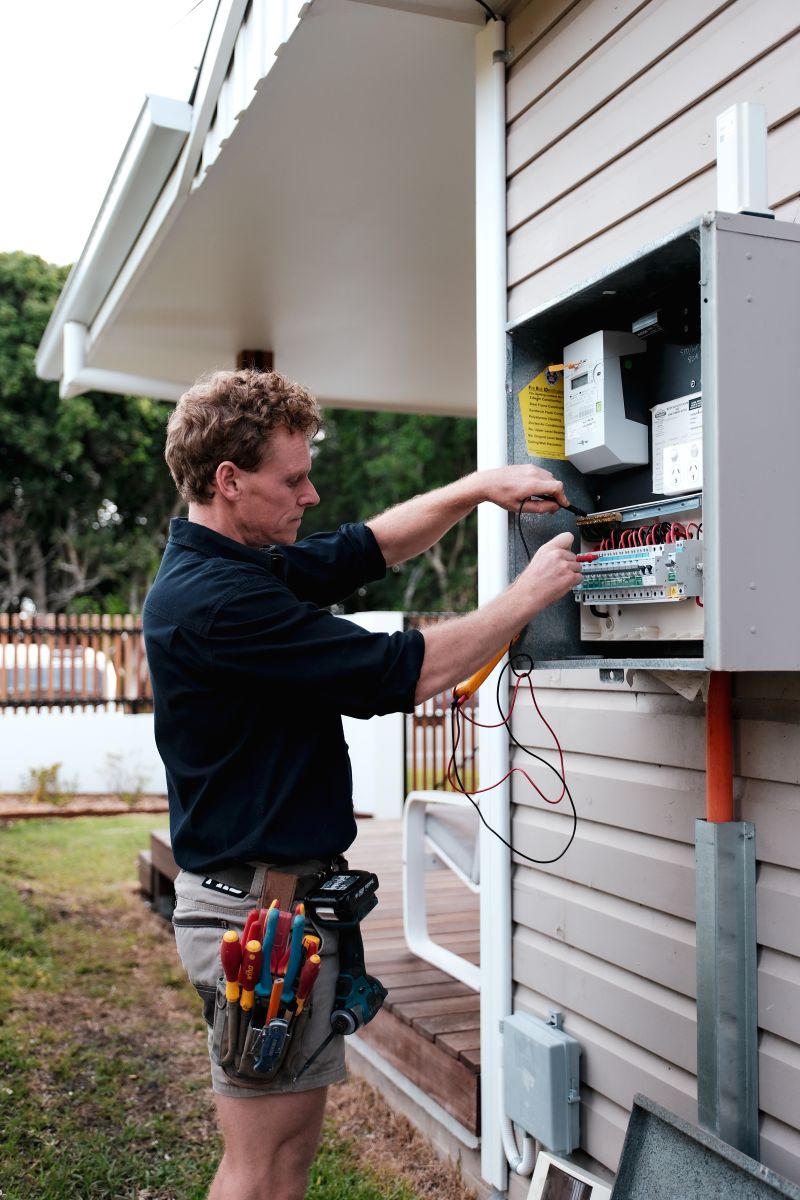
Short answer: we isolate the supply, test each circuit to pin down the fault, repair it properly, and check the board itself is sound, not just reset the switch and leave.
When we come out, we isolate the supply and work through the circuits with test gear to find exactly where the fault is, an appliance, a damaged cable, moisture, or a connection in the board. We repair the actual fault rather than just flicking the switch back on, and we check the rest of the board while we’re in there. If the board is old, full, or the safety switches are past their best, that’s often the point we’ll talk to you about a switchboard upgrade so it’s not a recurring problem. On older rural boards we also see this paired with the wear we describe in our rural switchboard upgrade work.
If half your house keeps going dark around Bellingen, Dorrigo, Coffs or Nambucca, get it traced properly before it becomes an after-hours callout. Book Damian for a fault-find and switchboard check or call 0402 079 803.
Frequently Asked Questions
Why Has Half My House Got No Power But The Rest Is Fine?
Because your house is split into separate circuits, each with its own switch in the board. A fault on one circuit trips only that switch, so the rest of the house keeps running. It usually points to a faulty appliance, moisture, or a problem on that one circuit or its safety switch, not a failure of your whole supply.
Is It Safe To Keep Resetting A Tripped Safety Switch?
No. The switch trips to protect you, and resetting it again and again forces power back onto a circuit that has a fault. If it won’t stay reset, or trips again within a few minutes, leave it off and call a licensed electrician. Repeatedly forcing it risks overheating, arcing and fire where the fault is.
Could A Single Appliance Be Tripping My Whole Circuit?
Yes, it’s the most common cause. A failing kettle, fridge, pool pump, heater or power tool can leak current to earth and trip the safety switch protecting that circuit. Unplug everything on the dead circuit, reset once, then plug items back one at a time. The appliance that trips it again is your culprit and should be repaired or replaced.
Do I Need An Electrician Or Will The Power Company Fix It?
If the rest of your street has power, the fault is inside your property and it’s an electrician’s job, not the network’s. The network (Essential Energy on the Mid North Coast) is only responsible up to the point of supply. Anything past your meter, your circuits, board and wiring, is yours, and needs a licensed electrician.
How Much Does It Cost To Find An Electrical Fault?
It depends on how long the fault takes to trace and what the repair involves, a faulty appliance is quick, while a hidden cable or board fault takes longer. We give you a price before we start the repair, once we’ve found what’s actually wrong. The honest answer is that fault-finding is charged on what the job needs, so we’ll always quote you rather than guess.

Our Services
Get A Free Quote
Contact us today for a free, no-obligation quote on your electrical needs.
