
If you’ve got a shed on acreage and you’re thinking about turning it into a proper workshop, the electrical side of things matters more than most people realise.
Running a MIG welder, compressor and table saw off the same circuit that powers your house is asking for trouble, tripped breakers, flickering lights, and potentially dangerous overloads.
This guide covers what goes into wiring a serious rural workshop on the Mid North Coast, from dedicated circuits and sub-boards through to three-phase power for the big gear. If you’re just after basic shed power (lights, a few outlets, maybe a fridge), our guide on Shed Wiring on Acreage is a better starting point. This article is for the workshop that actually works hard.
Why Dedicated Circuits Matter
Most houses run multiple power points off shared circuits. That’s fine for a kettle and a TV. It’s not fine when you’re firing up a 32-amp MIG welder alongside an air compressor.
Here’s what happens when you daisy-chain heavy tools off house circuits:
- Tripped breakers mid-job: A welder pulling 30+ amps on a 20-amp circuit will trip instantly, or worse, overheat the wiring before the breaker does its job.
- Voltage drop: Long cable runs from the house board to an outbuilding cause voltage sag. Your tools run hotter, slower, and wear out faster.
- Nuisance trips in the house: Your partner loses power to the kitchen because you started the compressor. That conversation never goes well.
- Fire risk: Overloaded wiring in walls and cable runs is one of the leading causes of electrical fires in rural properties.
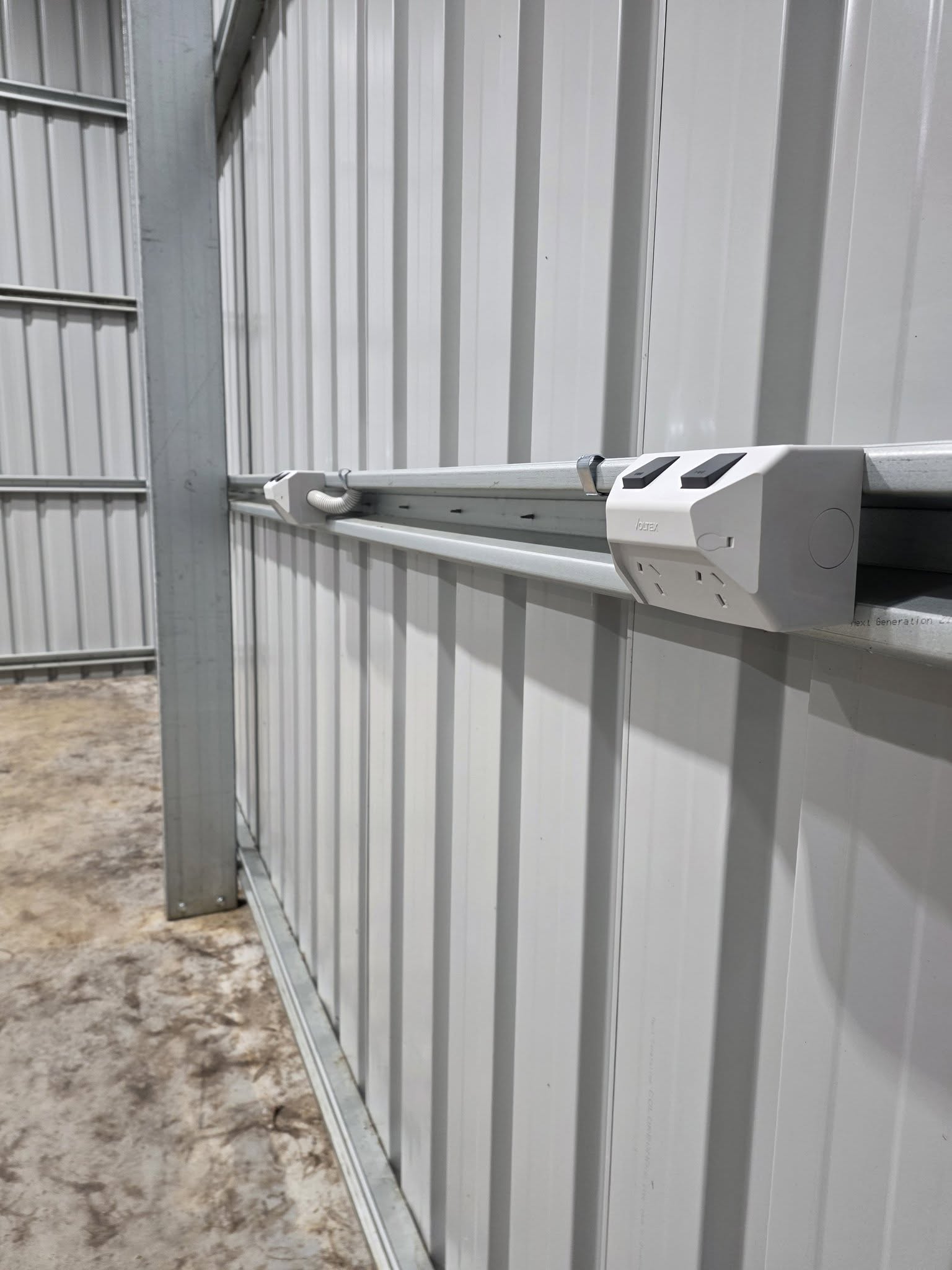
Dedicated circuits solve all of this. Each heavy tool gets its own circuit, properly sized for the load, with its own breaker protection. Nothing shares. Nothing overloads.
Common Workshop Equipment And Power Draws
Before your electrician can design the circuit layout, you need to know what you’re running. Here’s what typical workshop gear actually pulls:
- MIG welder: 15A to 32A depending on the unit. The bigger 240V welders sit at the top of that range. Three-phase units are a different story (more on that below).
- Air compressor: 10A to 15A. The startup surge is the killer here, compressor motors can pull 3-4 times their running current for a few seconds when kicking in.
- Table saw: 10A to 15A for a decent cabinet saw. Cheaper contractor saws are lower, but you’re not reading this article for a cheap saw.
- Lathe (wood or metal): 10A to 15A. Metal lathes tend toward the higher end.
- Dust extractor: Around 10A for a single-phase unit. Needs to run continuously while you’re using other tools, so it must be on its own circuit.
- Plasma cutter: 20A to 30A. Similar draw to a welder, and the same rule applies, it needs its own dedicated circuit.
Add those up and you can see why a single 20-amp circuit from the house isn’t going to cut it. A properly kitted workshop can easily draw 80-100+ amps across all circuits when everything’s running.
Circuit Breaker Sizing And RCD Protection
Every circuit in the workshop needs a breaker matched to the cable size and expected load. Your electrician will calculate these based on what you’re running, but as a general guide:
- 15A or 20A circuits: For general power points, dust extractors, lighting circuits and lighter tools
- 32A circuits: For welders, plasma cutters and other heavy single-phase gear
- Three-phase breakers: Sized to the specific equipment (more below)
RCD protection is mandatory. Under AS/NZS 3000 (the Australian Wiring Rules), all power and lighting circuits require RCD (safety switch) protection. This isn’t optional, it’s the law, and it’s there because workshops are high-risk environments.
Concrete floors, metal tools, dust, and moisture all increase the chance of an earth fault. RCDs cut power in milliseconds if current leaks to earth, which is the difference between a tingle and a trip to hospital.
Your electrician will typically install a combination of RCDs and MCBs (miniature circuit breakers), or RCBO units that combine both functions in one device. RCBOs are ideal for workshops because a fault on one circuit doesn’t kill power to everything else.
A Dedicated Sub-Board For Your Workshop
Rather than running a dozen individual cables back to the house switchboard, a dedicated sub-board in the workshop is the smart move. Here’s why:
- Shorter cable runs: One heavy feed cable from the house (or a separate meter) to the workshop board, then short runs from the sub-board to each outlet. Less voltage drop, lower cable costs.
- Easier fault-finding: Each circuit is labelled and accessible right there in the workshop. If a breaker trips, you’re not walking back to the house to reset it.
- Room to grow: A properly sized sub-board gives you spare ways for future circuits. Adding a new tool later is straightforward.
- Isolation: You can kill all workshop power from one main switch without affecting the house.
If your house switchboard is old or already at capacity, you may need a switchboard upgrade before the workshop sub-board can be fed properly. Old ceramic fuse boards can’t handle the additional load safely.
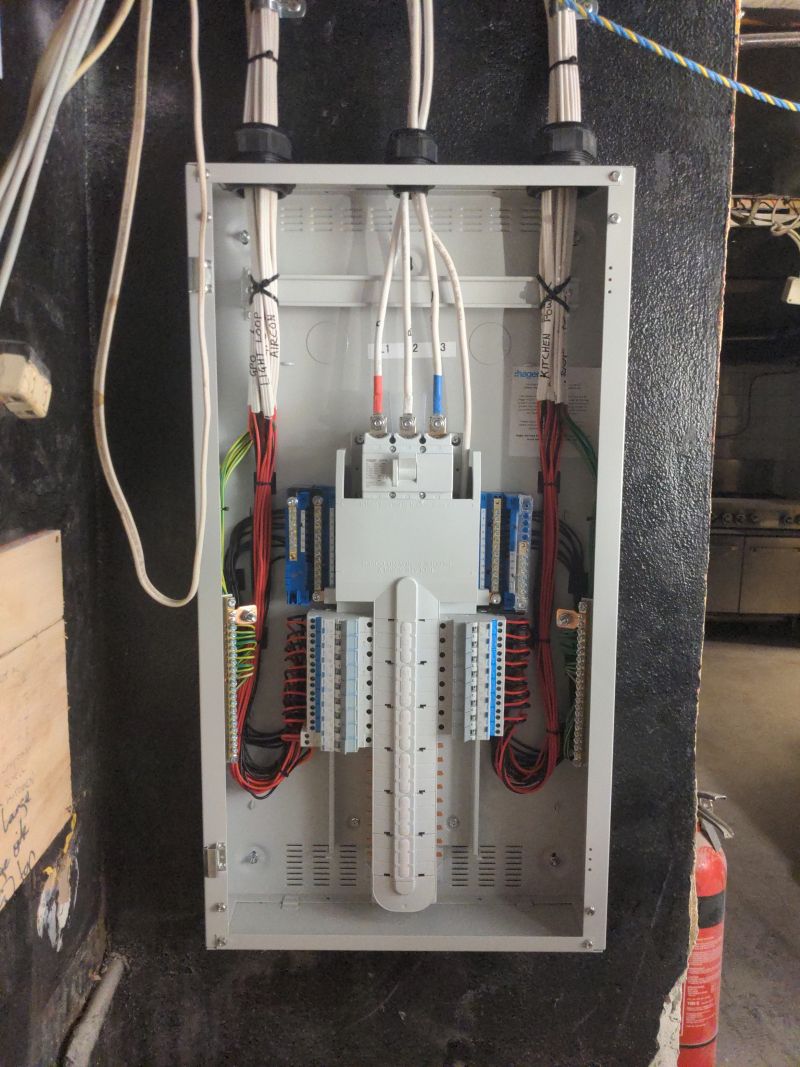
A typical workshop sub-board setup includes a main switch, individual RCBOs for each circuit, a dedicated lighting circuit, and a surge protection device. We’ll size the incoming feed cable based on the total expected load plus a margin for future additions.
Lighting Your Workshop
Good lighting is also needed, it is a safety issue. You need to see what your hands are doing around spinning blades and hot metal. A few things to get right:
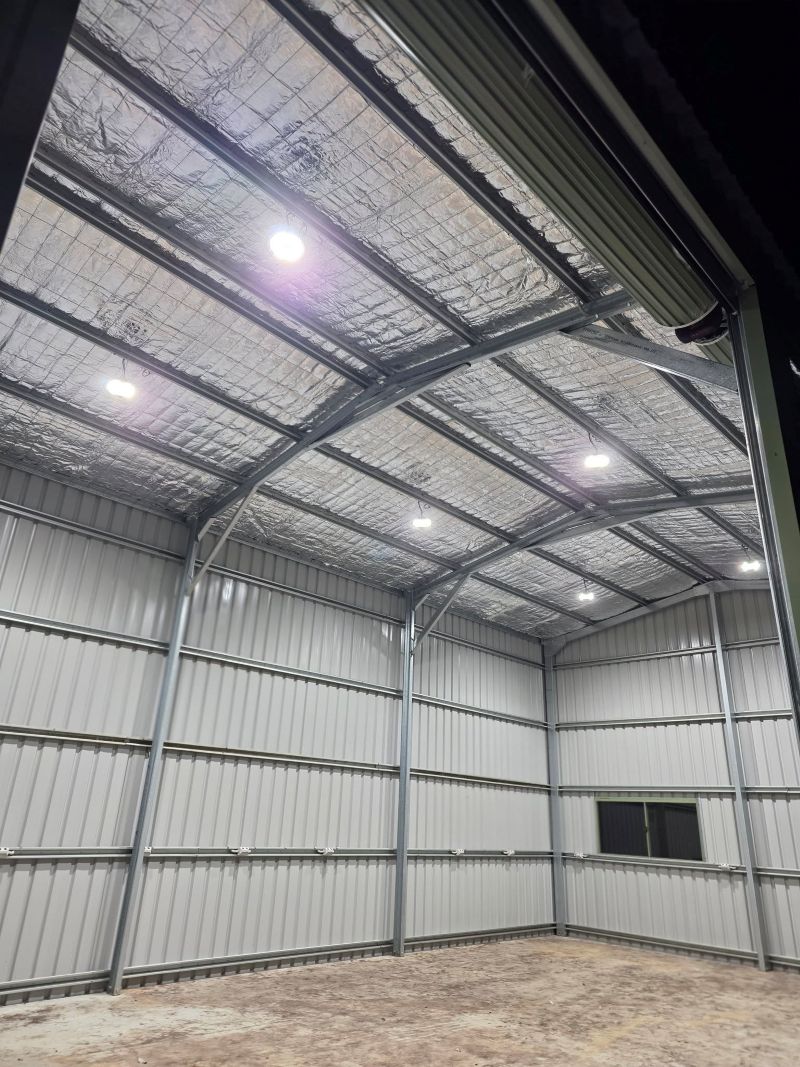
- High-lumen LED battens: LED panels or battens give even, bright light across the whole space. Aim for 500+ lux at bench height as a minimum.
- Dust-rated fittings: Standard light fittings fill up with sawdust and metal filings. IP-rated (dust and moisture protected) fittings last longer and are safer in a workshop environment.
- Task lighting at the bench: Overhead lighting handles the general space. Add focused lighting at the workbench, lathe, and drill press where precision matters.
- Separate lighting circuit: Lighting runs on its own circuit so you still have light if a power circuit trips. Nothing worse than being left in the dark next to a spinning table saw.
Lighting layouts in commercial properties is something we are experienced with. We can help you with a workshop lighting layout that will massively improve your working conditions
Ventilation And Dust Extraction Circuits
If you’re doing any woodwork or welding, ventilation is as important as the power itself. Dust extraction systems and exhaust fans need their own dedicated circuits because:
- They run continuously: Your dust extractor needs to be on whenever you’re cutting. It can’t share a circuit with the tool it’s extracting for.
- Motor startup loads: Extraction fans and dust collectors have the same startup surge issues as compressors.
- Interlocked switching: In a well-designed workshop, the dust extractor can be wired to start automatically when certain tools are powered on. This needs proper circuit design.
Plan for at least one dedicated 15A circuit for dust extraction and one for general ventilation. If you’re running a cyclone-style dust collection system, it may need a 20A circuit depending on the motor.
Three-Phase Power For The Big Gear
Once you get into serious metalwork, large compressors (5HP+), or commercial-grade woodworking gear, single-phase power hits its limits. Three-phase gives you:
- More power capacity: Three-phase motors are more efficient and can deliver more grunt without the massive startup surges of single-phase equivalents.
- Bigger welders and plasma cutters: Industrial MIG/TIG welders and CNC plasma tables typically run three-phase.
- Smoother motor operation: Three-phase motors run smoother and cooler, which means longer tool life.
Getting three-phase to a rural property on the Mid North Coast depends on what’s available at the street. Some properties already have three-phase supply from the grid; others need a phase converter or a new connection from Essential Energy.
Our guide on Do I Need Three-Phase Power on My Property? covers the full decision process.
If three-phase is available, your workshop will need a three-phase switchboard installation with appropriately rated breakers and a proper earth system.
Surge Protection, Protecting Your Investment
Workshop tools with electronic controls, VFDs (variable frequency drives), digital readouts, and inverter welders are all sensitive to voltage spikes. And here’s the thing, your own workshop creates surges every time a large motor starts or stops. Add in the voltage instability that’s common on rural power lines, and your gear is at risk.
A surge protection device (SPD) installed at the sub-board catches voltage spikes before they reach your equipment. It’s cheap insurance compared to replacing the electronics in a $3,000 welder or a CNC controller.
If your property is in a storm-prone area (and the Mid North Coast sees its share), we also recommend surge protection at the main switchboard to catch lightning-induced surges on the incoming supply.
For properties that rely on a generator as backup power, a generator changeover switch ensures clean switching between mains and generator without back-feeding or damaging connected equipment.
Extra Fit-Out Considerations
A few other things worth planning into the workshop wiring from the start:
- Enough power points: More power points and switches than you think you need. Weatherproof GPOs if the workshop is open-sided. Double power points at every bench position, plus outlets at machine locations.
- Data and comms: If you want internet in the workshop for streaming music, running a CNC machine, or security cameras, plan the data and TV wiring at the same time as the electrical. It’s much easier to run cables during the fit-out than after the walls are lined.
- External lighting: Floodlights on the workshop exterior for early morning and late evening access, especially on rural properties without street lighting.
- EV or equipment charging: If you’re running electric equipment (battery-powered tools, an EV, an electric quad bike), a dedicated charging circuit avoids overloading your general outlets.
What Does A Workshop Electrical Fit-Out Cost?
Costs vary depending on the size of the workshop, how many circuits you need, and whether three-phase is involved. As a rough guide for the Mid North Coast:
- Basic single-phase setup (sub-board, 4-6 circuits, lighting), From $5,000
- Full dedicated sub-board (8-12 circuits, multiple heavy tool circuits, dust extraction, full lighting design), From $10,000
- Three-phase workshop build (three-phase supply, dedicated board, heavy equipment circuits, full fit-out), From $15,000+
These are starting points. Complex layouts, long cable runs from the mains, or the need for Essential Energy supply upgrades will push costs up. We’ll give you a straight quote based on your actual workshop and equipment list, no surprises.
NSW Law, All Electrical Work Must Be Licensed
This is the non-negotiable bit. In NSW, all electrical wiring work must be carried out by a licensed electrician. That includes running new circuits, installing sub-boards, fitting power points, and connecting equipment. There’s no DIY exemption for electrical work, even on your own property.
Hack-It Electrical Solutions holds NSW Electrical Contractor Licence #230609C. We work across Bellingen, Coffs Harbour, Sawtell, Nambucca Heads, Woolgoolga, Urunga, Dorrigo, Valla Beach, and Toormina.
Unlicensed electrical work voids your insurance, creates serious safety risks, and can result in fines. If someone’s offering to do it cheap without a licence, that’s not a saving, it’s a liability.
Frequently Asked Questions
Can I Run My Welder Off A Normal Power Point?
Small stick welders (up to about 140A output) can run off a standard 10A or 15A power point, but anything bigger needs a dedicated circuit. A 200A+ MIG welder on a 10-amp GPO will trip the breaker immediately, or overheat the wiring if the breaker is faulty. If you’re welding regularly, get a dedicated 32A circuit installed.
How Many Circuits Does A Typical Workshop Need?
It depends on your tools, but a well-equipped workshop usually needs 8-12 circuits minimum: dedicated circuits for each heavy tool (welder, compressor, plasma cutter), general power point circuits, dust extraction, lighting, and a spare or two for future additions. We design it based on your actual equipment list.
Do I Need Three-Phase For A Home Workshop?
Not necessarily. Most home workshops run fine on single-phase with dedicated circuits. You’ll only need three-phase if you’re running commercial-grade equipment, big compressors (5HP+), three-phase welders, or CNC machinery. Read our full guide on Do I Need Three-Phase Power on My Property? to see if it makes sense for your setup.
Can My Existing Switchboard Handle A Workshop?
Maybe. If your house switchboard is modern and has spare capacity, we can often feed a workshop sub-board from it. If it’s an old ceramic fuse board or already fully loaded, you’ll need a switchboard upgrade first. We’ll assess this during the quoting process.
How Long Does A Workshop Electrical Fit-Out Take?
A basic single-phase setup can be done in 1-2 days. A full fit-out with multiple heavy circuits, three-phase, and complete lighting takes 3-5 days depending on the complexity and cable run distances. We’ll give you a timeline with your quote.
Get Your Workshop Wired Properly
If you’re setting up a workshop on your property and want it done right from the start, give us a call. We’ll come out, look at your space and your equipment list, and put together a plan that gives you the power you need without cutting corners.
Call Hack-It Electrical Solutions on 0402 079 803 or contact us online to book a quote.
We’re your local electrician in Bellingen, and we service the entire Mid North Coast from Nambucca Heads to Woolgoolga and up to Dorrigo.
What Others Are Reading:

Our Services
Get A Free Quote
Contact us today for a free, no-obligation quote on your electrical needs.
