
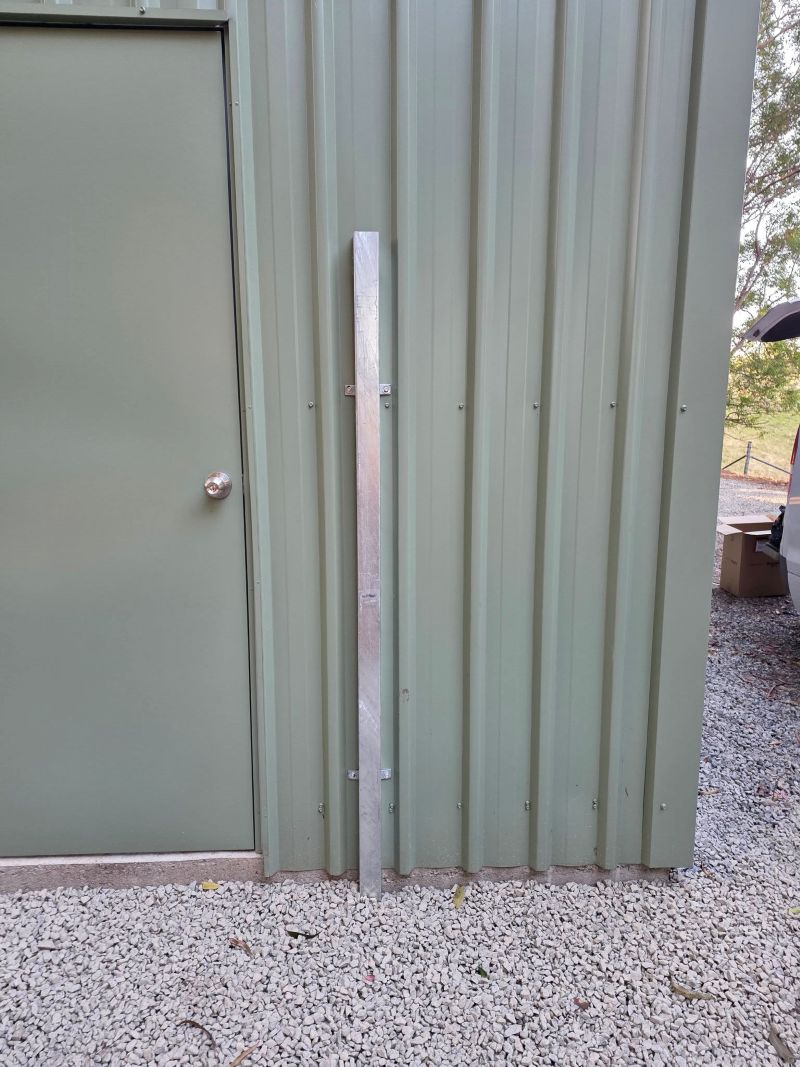
If you’ve got a shed on acreage and you’re sick of running extension leads from the house, it’s time to get it wired properly. Whether it’s a basic storage shed that just needs a light and a power point, or a full workshop where you’re running welders and compressors, there’s a right way to do it, and in NSW, the only legal way is with a licensed electrician.
Here’s what’s actually involved in getting power to your shed, what your electrician will need to install, and what it’s likely to cost on the Mid North Coast.
It Starts With The Cable Run
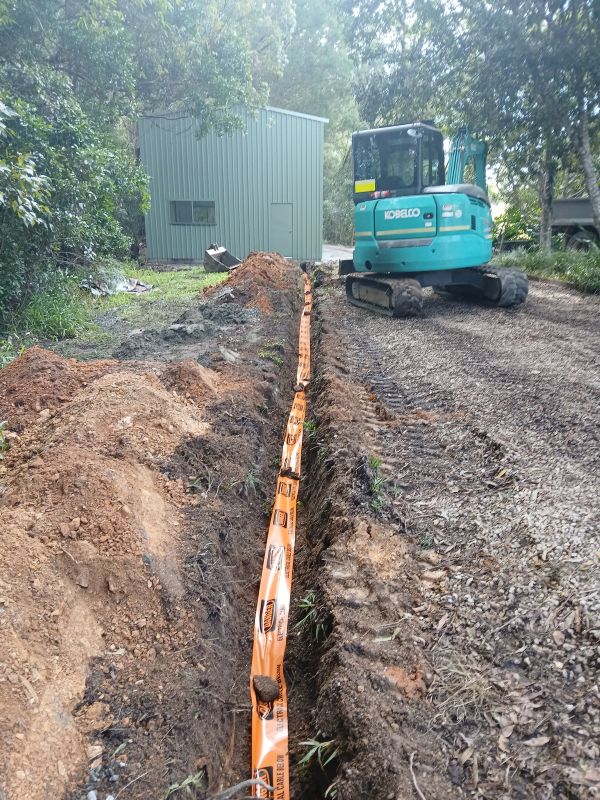
The biggest factor in any shed wiring job is getting power from your main switchboard to the shed. On acreage, that distance can be 30, 50, even 100+ metres. The longer the run, the bigger the cable needs to be to handle voltage drop.
You’ve got two options:
- Underground cable run — This is the most common and tidiest option. Your electrician will run heavy-duty cable through orange conduit buried at least 500mm deep (or deeper if vehicles cross over it). It’s protected from weather, animals, and falling branches. On acreage, this is almost always the better choice.
- Overhead cable run — Less common these days, but sometimes necessary if the ground is solid rock or the terrain makes trenching impractical. Overhead runs need proper clearance heights and support poles, which adds cost.
For most acreage properties around Bellingen, Coffs Harbour, and the Mid North Coast, underground is the go-to. Your electrician in Bellingen can assess the site and recommend the best route.
Your Shed Needs Its Own Sub-Board
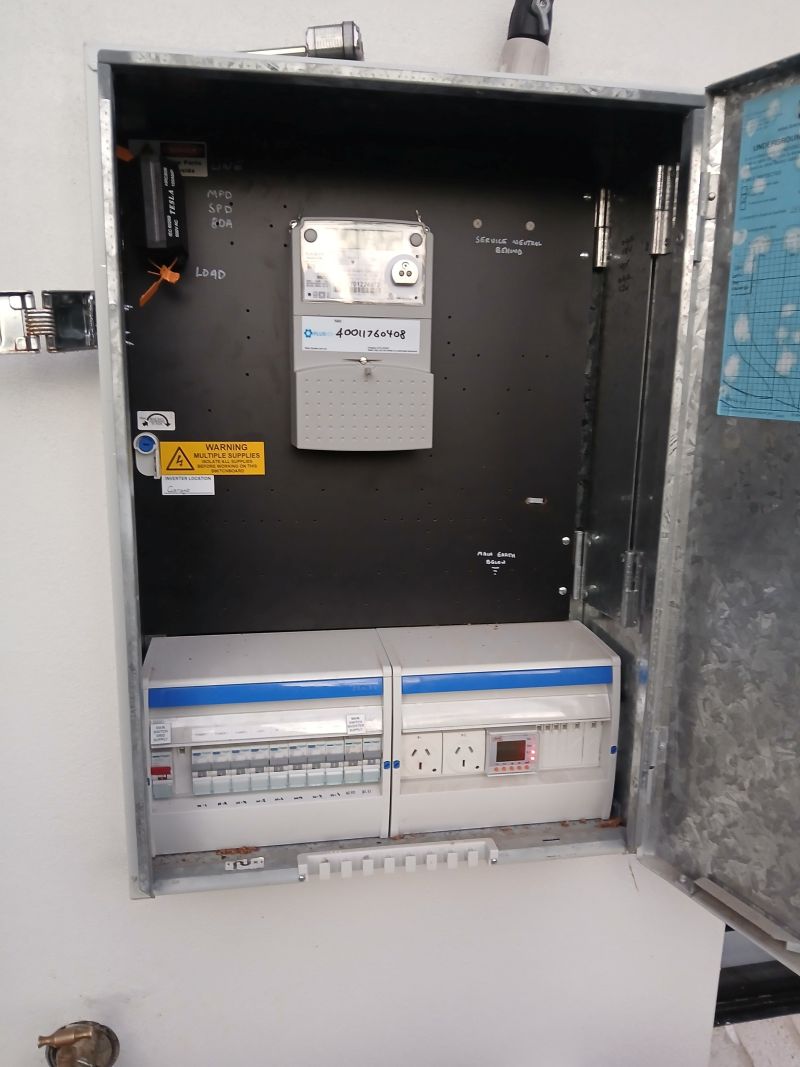
You can’t just run a single cable to the shed and plug things in. Any shed that’s getting a proper power supply needs a dedicated sub-board (also called a distribution board). This is essentially a mini switchboard inside the shed that manages all the circuits.
Your sub-board will include:
- Main switch — So you can isolate all power to the shed independently from the house.
- RCDs (safety switches) — These are mandatory under NSW electrical regulations. They cut the power in milliseconds if there’s a fault — critical in a shed environment where moisture, dust, and damaged leads are more common.
- Circuit breakers — Individual protection for each circuit in the shed (lighting, general power, dedicated tool circuits).
If your house switchboard is older, your electrician may also recommend switchboard upgrades at the main board to handle the extra load going out to the shed.
What Goes Inside The Shed
What your electrician installs inside the shed depends entirely on what you’re using it for. Here’s how it typically breaks down.
Basic Storage Shed
For a shed that’s mainly storing tools, a ride-on mower, or general gear:
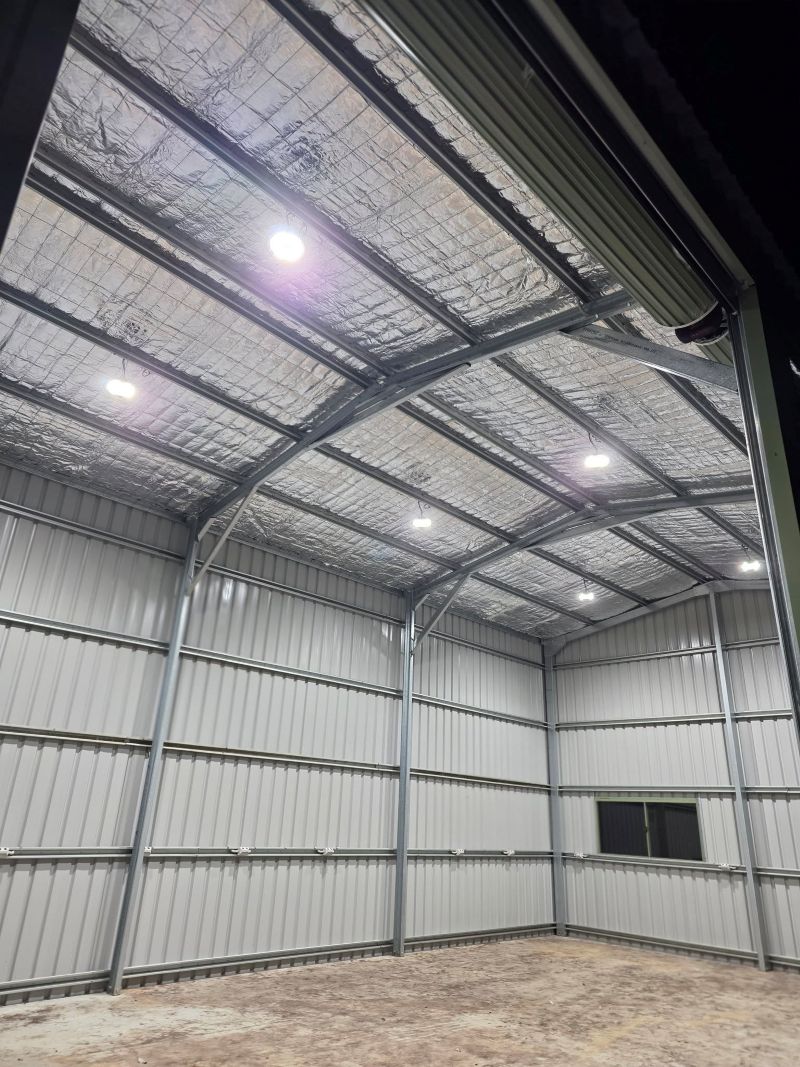
- LED batten lights — One or two ceiling-mounted LED battens will light the whole space. Your electrician can advise on the best lighting layout for the shed size.
- Two to four general power points — Enough to plug in a charger, a radio, or a drop saw when you need it. Standard power points and switches on a single circuit.
- External light — A weatherproof LED above the door so you’re not fumbling around in the dark.
Powered Workshop Shed
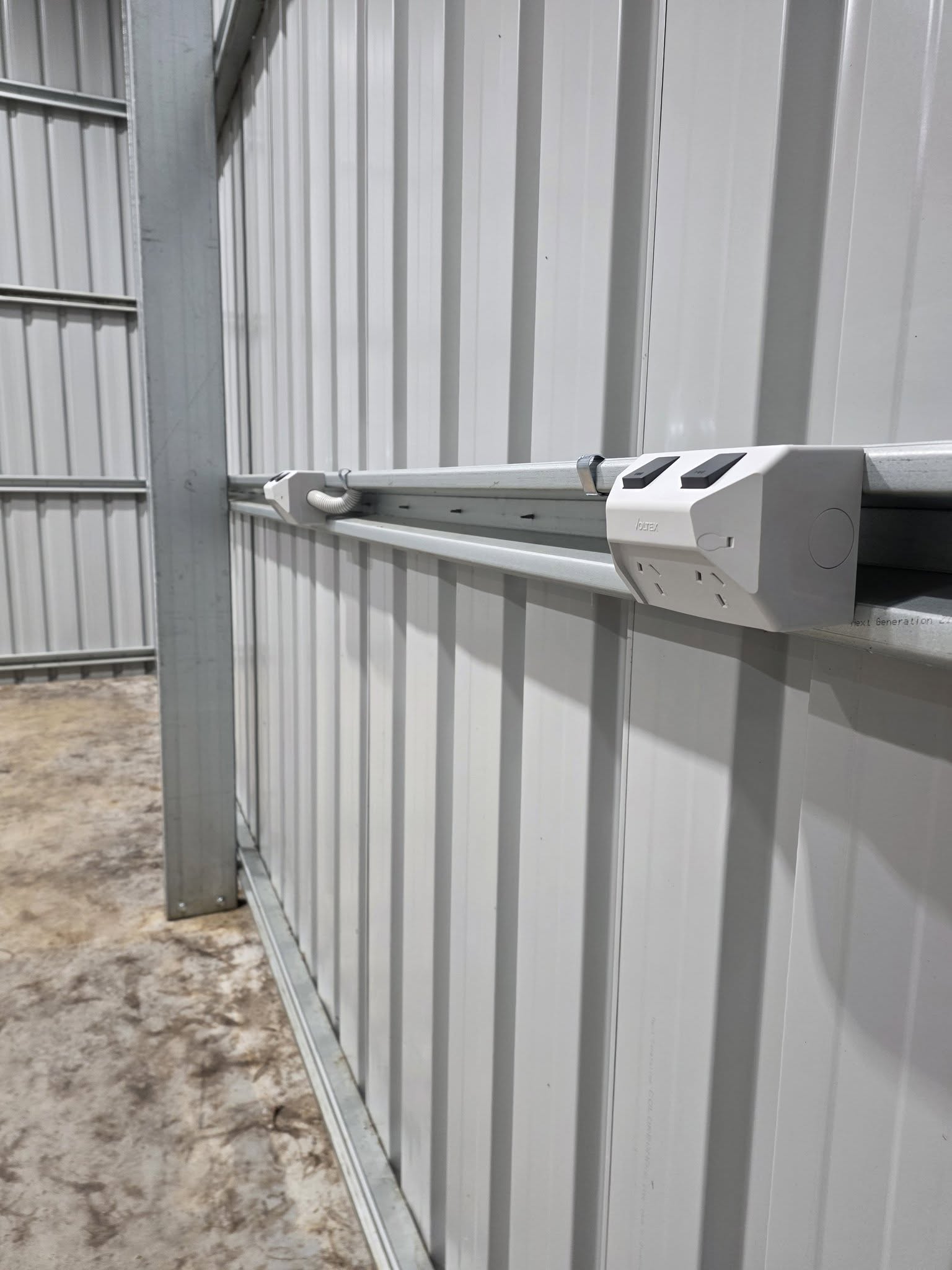
If you’re running power tools regularly — drop saws, bench grinders, dust extractors — you need more than basic wiring:
- Multiple circuits — Separate circuits for lighting, general power, and dedicated power tool outlets. This stops the lights flickering every time you fire up the saw.
- Higher-rated power points — 15-amp or 20-amp outlets for heavier tools.
- More power points, better placement — Points at bench height, not just at skirting level. Think about where your workbenches actually sit.
- Dedicated lighting — Brighter, more targeted lighting over work areas. LED high-bays for larger sheds.
For detailed guidance on setting up dedicated circuits for heavy tools, have a read of Powering a Rural Workshop — Dedicated Circuits for Heavy Tools and Equipment.
Full Workshop With Three-Phase Power
If you’re running serious machinery — large compressors, lathes, MIG welders, or commercial-grade equipment — single-phase power might not cut it. That’s where three-phase comes in.
Three-phase power delivers more consistent, higher-capacity power. Your electrician will need to:
- Arrange a three-phase supply from your energy distributor (this can take a few weeks on the Mid North Coast).
- Install a three-phase sub-board in the shed with appropriate breakers and RCDs.
- Run heavier cabling — three-phase cable runs are more expensive, especially over longer distances.
- Install three-phase outlets — Industrial-style sockets rated for the equipment you’re running.
If you’re not sure whether you actually need three-phase, read Do I Need Three-Phase Power on My Property? — it covers when it’s worth it and when single-phase with the right setup will do the job. We also handle full three-phase switchboard installation if that’s the direction you go.
Don’t Skip Surge Protection
Acreage properties on the Mid North Coast cop more than their fair share of lightning storms. A direct or nearby strike can fry everything in your shed — tools, chargers, fridges, anything plugged in.
A quality surge protection device installed in the sub-board is cheap insurance. It absorbs voltage spikes before they reach your equipment. For sheds with expensive tools or a workshop setup, it’s a no-brainer.
If your property also runs a generator for backup power, your electrician can install a generator changeover switch so the shed (and the house) can switch to generator power safely during outages.
What About Council Approval And Compliance?
A few things to be aware of:
- All electrical work in NSW must be done by a licensed electrician. No exceptions. You can dig the trench yourself to save on labour, but the electrical work — cabling, connections, sub-board, everything — must be done by a licensed contractor who issues a Certificate of Compliance (CCEW).
- Underground cable depth must meet AS/NZS 3000 (the Wiring Rules). Your electrician handles this.
- If the shed is a new build, you may need development approval depending on your council and the shed size. The electrical work itself doesn’t need a separate permit, but the overall build might.
Hack-It Electrical Solutions holds NSW Electrical Contractor Licence #230609C. Every job gets a compliance certificate.
What Does Shed Wiring Cost On Acreage?
Every shed is different — distance from the house, single-phase or three-phase, how many circuits, the soil conditions for trenching. But here’s a realistic guide for the Mid North Coast:
- Basic shed wiring (light + a few power points, short cable run) — From $2,500
- Powered workshop shed with sub-board and multiple circuits — From $4,500
- Full workshop setup with three-phase, dedicated circuits, and surge protection — From $8,000+
Longer cable runs (50m+), rocky ground that needs a rock saw, or three-phase supply upgrades will all push the price up. The best way to get an accurate figure is to have your electrician visit the property, walk the cable route, and understand what you’re actually doing in the shed.
Want a straight answer on pricing for your specific setup? Give us a call on 0402 079 803 or contact us here.
Frequently Asked Questions
Can I Wire My Shed Myself In NSW?
No. All electrical work in NSW must be carried out by a licensed electrician. This includes running cable to the shed, installing the sub-board, power points, lighting — everything. DIY electrical work is illegal and dangerous. Your electrician will issue a Certificate of Compliance once the work is done.
How Deep Does Underground Cable Need To Be Buried?
Under the Australian Wiring Rules (AS/NZS 3000), underground cable in conduit needs to be buried at least 500mm deep in normal conditions. If vehicles drive over the route, it needs to go deeper — typically 600mm or more. Your electrician will specify the correct depth for your property.
Do I Need A Separate Meter For My Shed?
In most cases, no. Your shed sub-board connects back to your main house switchboard and runs off the same meter. A separate meter is only needed if the shed is being used as a separate dwelling or commercial premises — and that’s a different conversation involving council and your energy distributor.
How Long Does It Take To Wire A Shed On Acreage?
A basic shed wiring job — trenching, cable run, sub-board, lights, and power points — usually takes one to two days once the trench is ready. If you’re digging the trench yourself, your electrician can tell you the exact route and depth before you start. Three-phase jobs take longer because the supply connection needs to be arranged with the distributor first.
Can I Run Power From The Shed To Other Buildings?
Yes, but each additional building needs its own properly rated cable run and may need its own sub-board depending on the load. Your electrician can design the whole layout across multiple buildings so the cabling and switchboard capacity are right from the start — rather than adding bits on later and ending up with problems.
Get Your Shed Wired Right
If you’re on acreage around Bellingen, Coffs Harbour, Sawtell, Boambee, or anywhere on the Mid North Coast, Hack-It Electrical Solutions can get your shed set up properly — whether it’s a basic light-and-power job or a full three-phase workshop.
Call us on 0402 079 803 or get in touch through our website to book a site visit. We’ll walk the property, work out the best cable route, and give you a straight quote.
Hack-It Electrical Solutions — NSW Electrical Contractor Licence #230609C — 5 stars, 114 reviews

Our Services
Get A Free Quote
Contact us today for a free, no-obligation quote on your electrical needs.
